Minoxidil or Finasteride for Women? Finasteride Isn't FDA-Approved
Minoxidil is the first-line pick for female pattern hair loss. Finasteride isn't FDA-approved for women. Side effects and pregnancy risks, side by side.
For most women, minoxidil comes first.
Cleveland Clinic’s treatment guide calls topical minoxidil “the first-line treatment for female pattern hair loss.” It also notes that minoxidil is FDA-approved for both male and female pattern hair loss. Finasteride is FDA-approved for male pattern hair loss “but not female pattern hair loss.”
- Minoxidil is sold over the counter in 2% and 5% strengths, according to Balance Hair Restoration. Its benefits last only while you keep applying it, according to the AAD.
- Finasteride carries a warning for women. Balance says it “is not safe for women who are pregnant or breastfeeding and can impact birth control effectiveness.”
- You don’t always have to pick one. Dermatologists may use more than one treatment for women, according to the American Academy of Dermatology.
This page sums up published sources. It is not medical advice.
Ask about minoxidil first if your thinning is on the top of your head and you want the option that is approved for women. Ask about finasteride only if you are not pregnant or breastfeeding and your doctor has looked at how it affects birth control.
What female pattern hair loss looks like and why it happens
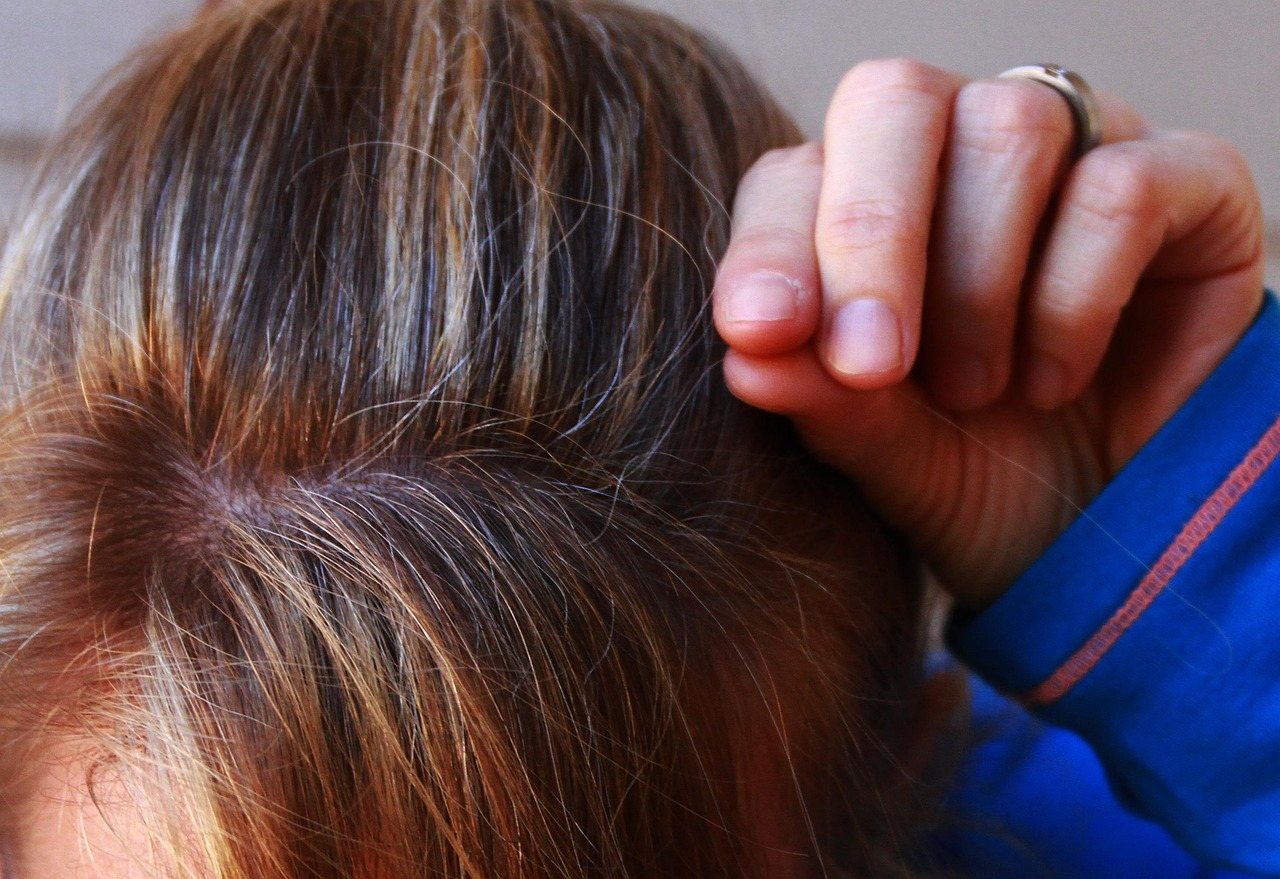
In women, pattern hair loss thins the hair at the top of the head. Men tend to get a receding, M-shaped hairline instead, according to MedlinePlus Genetics.
The AAD notes that female pattern hair loss (FPHL) is more common after menopause, so hormones may play a role. That hormone link is one reason a hormone-targeting drug like finasteride comes up at all.
Rule out other causes before choosing a medicine
Both medicines here are aimed at pattern hair loss, but thinning has other causes. MedlinePlus lists the main types of hair loss. NIAMS covers alopecia areata, which is a different kind of hair loss. If your thinning does not look like the top-of-head pattern described above, have a dermatologist confirm what it is before you weigh these two.
Minoxidil: strengths, how it works and the early shedding phase
Minoxidil is a medicine you put on your scalp, according to Balance. Cleveland Clinic’s guide also lists a 5% foam.
How it works. Three sources describe it from different angles:
- The Independent Pharmacy calls it a vasodilator, meaning a drug that widens blood vessels.
- Balance says it widens the blood vessels in the scalp and shortens the hair’s resting phase.
- Cleveland Clinic says it enlarges shrunken hair follicles and lengthens the growth phase.
Who it is for. Cleveland Clinic describes minoxidil as effective in women “regardless of androgen status and age.” Androgens are male-type hormones. In other words, the results it reports did not depend on a woman’s hormone levels or her age.
2% or 5%. Cleveland Clinic cites a meta-analysis (a study that pools earlier trials) in women. It found “no significant difference in efficacy and safety between different concentrations.” The same guide says the 5% strength is more likely than 2% to cause local itching and irritation. So if 5% itches, 2% is the strength to ask about.
The shed and the wait. Some short-lived shedding can happen when you first start, according to Cleveland Clinic. The guide says minoxidil’s results are judged after one year of use. An early shed is not the final word.
The catch. If you stop applying it, you lose its benefits (AAD). Who should skip it: anyone who can’t keep applying it for the long term. Say so before you start, and ask a dermatologist what else might work, including whether to combine treatments.
Finasteride: a hormone-targeting pill mainly prescribed for men
Finasteride is a pill. Cleveland Clinic gives the men’s dose as 1 mg daily. It says the pill lowers scalp DHT by about 60% to 70%, depending on the dose (Cleveland Clinic). DHT (dihydrotestosterone) is a hormone linked to pattern hair loss. The Independent Pharmacy describes finasteride as hormone-targeting and mainly for men with male pattern baldness.
The sources point both ways for women:
- For: Balance states that finasteride “is effective for women experiencing pattern hair loss.”
- Against: its FDA approval covers male pattern hair loss only, according to Cleveland Clinic.
So for a woman, finasteride would be prescribed outside its FDA-approved use, and that is a decision for a doctor.
Who should skip it: women who are pregnant or breastfeeding, given Balance’s warning. If you use birth control, raise Balance’s point that finasteride “can impact birth control effectiveness” before anything else. Minoxidil is the option with FDA approval for women.
Side effects reported: scalp irritation and extra hair growth for minoxidil, a pregnancy warning for finasteride
Cleveland Clinic lists these for minoxidil:
- Itching and irritation where it is applied, more likely with 5% than with 2%. The 2% strength is the fix to ask about.
- Contact dermatitis, a rash from something that touches the skin. The guide lists it as a common side effect.
- Hypertrichosis, meaning extra hair growth. This is also listed as common.
- Short-lived shedding when you first start.
For finasteride in women, the warning in these sources comes from Balance: it is not safe during pregnancy or breastfeeding, and it can affect how well birth control works.
Side-by-side comparison: minoxidil vs finasteride for women
| Minoxidil | Finasteride | |
|---|---|---|
| Form and strength | Applied to the scalp; 2% and 5%, over the counter (Balance); 5% foam (Cleveland Clinic) | Pill; 1 mg daily for men (Cleveland Clinic) |
| How it works | Widens blood vessels (Independent Pharmacy); enlarges shrunken follicles and lengthens the growth phase (Cleveland Clinic) | Lowers scalp DHT by about 60% to 70%, depending on dose (Cleveland Clinic) |
| FDA approval | Male and female pattern hair loss (Cleveland Clinic) | Male only, “not female pattern hair loss” (Cleveland Clinic) |
| Mainly for | First-line for FPHL; works in women “regardless of androgen status and age” (Cleveland Clinic) | Men with male pattern baldness (Independent Pharmacy); Balance calls it effective for women |
| Reported risks | Itch (more with 5%), contact dermatitis, extra hair growth, early shedding (Cleveland Clinic) | Not safe in pregnancy or breastfeeding; can affect birth control (Balance) |
| When results are judged | After one year of use (Cleveland Clinic) | Ask your dermatologist (question 4 below) |
| If you stop | Benefits are lost (AAD) | Ask your dermatologist (question 4 below) |
Counting the rows: minoxidil has a sourced answer in all 7. Finasteride has one in 5 of 7, and none of those 5 is an FDA approval for women.
Minoxidil has more support for women; finasteride is a question for a specialist
Minoxidil has real drawbacks. It is a long commitment: results are judged at one year, and the benefit ends when you stop. The 5% strength also itches more than the 2%. Finasteride’s drawbacks are bigger for women. It has no FDA approval for female pattern hair loss, and it carries a warning for pregnancy and breastfeeding.
On the other side, minoxidil is the drug Cleveland Clinic names first-line for female pattern hair loss, and its FDA approval matches. Raise it first if your thinning is on top of your head and other causes have been ruled out. Finasteride is something to ask a dermatologist about, and they may combine treatments (AAD).
Questions to ask a dermatologist before starting
- Is this female pattern hair loss, or another type such as alopecia areata?
- Should I start on 2% or 5%, given the meta-analysis and the higher itch rate with 5% (Cleveland Clinic)?
- If I shed after starting, how will we tell that apart from the condition getting worse?
- If you suggest finasteride, when would we judge whether it is working, and what happens if I stop?
- Given Balance’s warning on pregnancy, breastfeeding and birth control, is finasteride an option for me at all?
- Would combining treatments make sense in my case (AAD)?
How we evaluated
We compared the two medicines on seven points: form, how each works, FDA approval, who each is mainly for, reported risks, when results are judged, and what happens when you stop. Each point is taken from Cleveland Clinic, the AAD, MedlinePlus, NIAMS, and two treatment providers, Balance Hair Restoration and The Independent Pharmacy. Every table cell names its source.
When to see a dermatologist
See one before you start either medicine. Go sooner if:
- your thinning comes in patches or does not follow the top-of-head pattern
- scalp itching or a rash from minoxidil does not settle
- finasteride has been suggested while you are pregnant, breastfeeding or using birth control
Sources
- https://www.balancehairrestoration.com/finasteride-vs-minoxidil-which-hair-loss-treatment-is-best/
- https://consultqd.clevelandclinic.org/male-and-female-pattern-hair-loss-a-guide-to-treatment
- https://www.theindependentpharmacy.co.uk/hair-loss/guides/finasteride-vs-minoxidil-whats-the-right-choice-for-me
- https://www.aad.org/public/diseases/hair-loss/treatment/diagnosis-treat
- https://www.aad.org/public/diseases/hair-loss/types/female-pattern
- https://medlineplus.gov/genetics/condition/androgenetic-alopecia/
- https://medlineplus.gov/hairloss.html
- https://www.niams.nih.gov/health-topics/alopecia-areata